

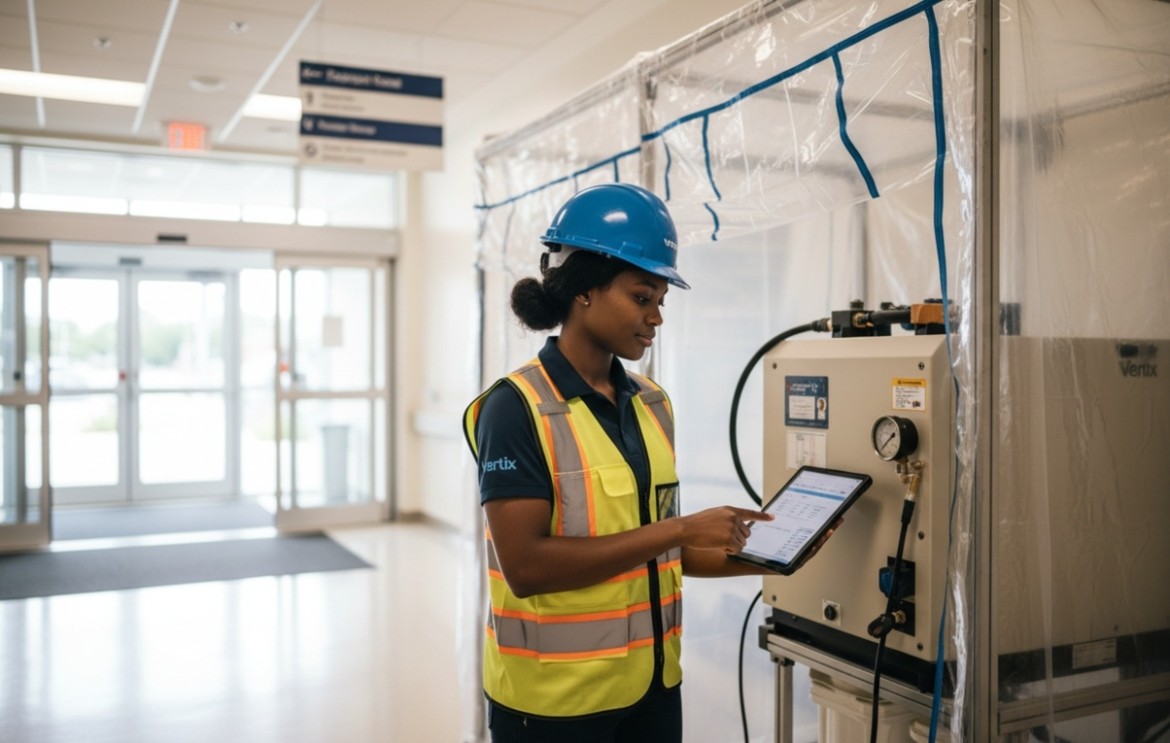
Healthcare work stalls when requirements don’t get translated into job-site steps. The Facility Guidelines Institute (FGI) publishes widely used guidance that many authorities reference for healthcare projects. This checklist helps you protect patients, reduce rework, and keep inspections moving.
Vertix Builders is a Colorado general contractor focused on phased remodels in active hospitals. See an occupied example at Swedish Medical Center.
Key FGI Requirements That Shape Healthcare Construction
FGI-based compliance is easier when you focus on what drives the most field risk: risk assessments and containment, air control, and coordination of clinical safety features.
Start with Risk Assessment and Containment Planning
Build a documented infection prevention plan before demolition. It should define the work type, patient risk level, and the controls you’ll enforce: barriers, routes, debris handling, and housekeeping.
A practical starting point is the ASHE ICRA 2.0 toolkit, which pairs an assessment with a permit and a “matrix of precautions.” Align facilities, infection prevention, EVS, and unit leadership early, then bake those requirements into logistics and phasing.
Control Air Movement and Quality Standards
Air is where compliance becomes measurable. Many teams use ANSI/ASHRAE/ASHE Standard 170 as the ventilation baseline for healthcare spaces.
In occupied work, plan for how you’ll maintain safe conditions during shutdowns and tie-ins. That may mean temporary negative air, capped penetrations, and clear restart procedures, plus a rapid response plan if readings drift.
Your checklist should require:
Pressure relationship verification after tie-ins and before reopening areas
Airflow and filtration checks for temporary equipment (like negative air machines) when used
Clear documentation: logs, test reports, and sign-offs for the AHJ and infection prevention team
Coordinate Safety Features Before Rough-In
Most rework comes from missed “clinical details,” not framing. Confirm these early:
Handwashing and hand hygiene locations and clearances
Medical gas and nurse call rough-in locations
Imaging shielding requirements and penetrations
Finish transitions that support cleaning and maintenance in sensitive areas
When requirements are unclear, reference FGI application guidance and FGI interpretations and document how the team applied them.
How Facility Directors Ensure FGI Compliance During Renovations
Don’t rely on memory. Build a room-by-room compliance matrix that ties each space to the governing criteria (FGI, ventilation design basis, owner policies), who owns each requirement, and the hold points (above-ceiling, pre-close, testing, final). Keep the matrix tied to drawing sheet numbers so field teams and reviewers are looking at the same references.
To keep operations steady, run the job with short-interval planning:
Rolling look-aheads that flag shutdowns, noise windows, and access changes
Weekly huddles with facilities, infection prevention, EVS, and unit leadership
Pre-close walks before drywall
FGI Guidelines Healthcare Construction: Frequently Asked Questions (FAQs)
These are the questions facility teams and project stakeholders ask most often when they’re trying to keep care areas running while construction is underway. Use the answers below as a quick gut-check before you finalize phasing, containment, and inspection hold points.
How can facility directors maintain FGI compliance in occupied areas without disrupting care?
Use a documented infection prevention plan (ICRA-style) and an enforceable permit process. Define the zone, routes, housekeeping rules, and air/pressure controls. Communicate weekly so clinical teams aren’t surprised.
What are the most critical FGI items to verify before walls close?
Medical gas rough-ins, ventilation distribution/pressure relationships, handwashing locations, device counts, and required clearances. Require a pre-close checklist and sign-off before drywall.
What challenges do contractors face under FGI requirements in active hospitals?
You have to protect utilities, maintain pressure relationships, and coordinate after-hours work. On projects like Sky Ridge Medical Center, work can sit next to the ICU and ED, so containment and coordination are non-negotiable.
How do you handle late-stage FGI requirement changes during construction?
Document the driver (AHJ comment, clinical change, interpretation). Route it through a formal change process, then update the compliance matrix and inspection plan. If it’s an “intent” question, reference FGI guidance and capture the rationale.
What documentation is required for FGI compliance verification?
Expect risk assessment/permit records, containment documentation as required by the facility, testing and balancing reports, commissioning docs, and inspection sign-offs. Organize closeout by room and system so it’s usable after turnover.
Turn FGI Requirements Into Field-Proof Steps
Kick off with facilities, infection prevention, EVS, unit leadership, and your construction team, before demolition. Use an ICRA-style tool to set containment expectations, define routes, and establish hold points.
Need a partner built for occupied healthcare? Explore Healthcare Construction services from Vertix Builders and schedule a collaborative planning session.