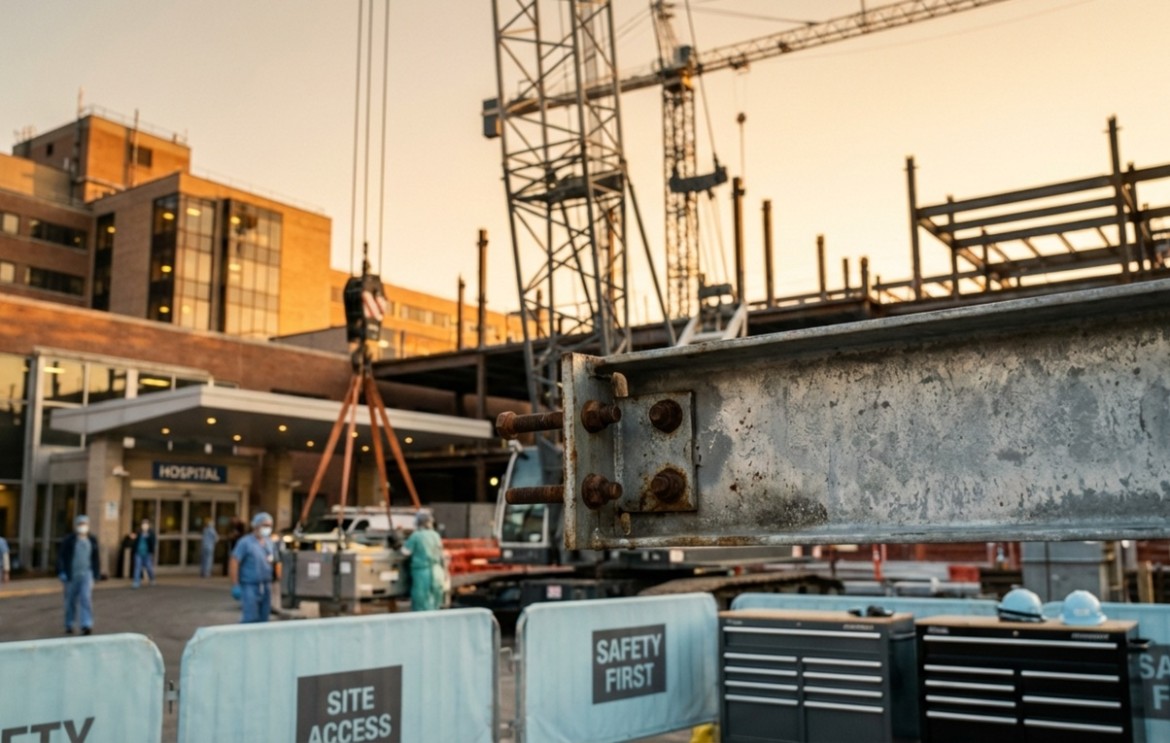
The current U.S. tariff policy is putting fresh pressure on healthcare construction budgets. Section 232 tariffs on steel and aluminum were increased in 2025, and contractors are still dealing with pricing volatility, supplier shifts, and long-lead equipment risk. For hospital leaders and facility directors, procurement strategy now matters as much as design and scheduling.
Vertix Builders helps healthcare clients plan around those variables early so projects stay buildable, operational, and aligned with patient care goals.
How Tariffs Move Through Hospital Project Costs and Schedules
Tariffs rarely show up as a single line item. They move through material quotes, fabricated assemblies, equipment packages, and the schedule assumptions behind them. In healthcare construction, that ripple effect matters because so many systems are specialized, code-driven, and hard to swap late.
In January 2026, AGC reported that prices for materials and services used in nonresidential construction rose 3.3% year over year, with especially sharp increases in aluminum and steel products.
Materials Hit First and Hardest
Structural steel, aluminum framing, panel enclosures, rooftop equipment housings, and other fabricated products usually feel the impact first. The issue is broader than raw material alone. In many cases, the steel or aluminum content inside imported products also affects cost, which can push up pricing on key building systems.
How Subcontractors Handle Price Uncertainty
When markets are unstable, trade partners protect themselves. That often means shorter bid-validity windows, larger material allowances, more exclusions, and stronger requests for substitution flexibility.
Owners who wait too long to buy out key scopes may end up comparing quotes built under different assumptions. Early alignment on escalation language, alternates, and procurement timing helps reduce surprises.
Schedule Impacts and Early Action Solutions
Tariffs can also slow projects by pushing suppliers to change sourcing, reprice packages, or prioritize certain product lines. That matters most with long-lead electrical and mechanical equipment.
Health Facilities Management’s hospital construction survey noted that some teams are selecting switchgear earlier in design to avoid schedule risk. If a package affects power, air balance, imaging readiness, or occupancy, it deserves an early procurement conversation.
Practical Strategies to Manage Tariff-Driven Disruptions
Tariff volatility is manageable when the team treats procurement as a strategic workstream instead of a late-stage purchasing task.
Buy critical packages earlier. Identify the scopes that affect structure, enclosure, power, or major MEP turnover and release them early when possible.
Preapprove alternates. Build a list of acceptable equivalent products so substitutions do not become a crisis later.
Separate commodity risk from general contingency. Track steel-, aluminum-, and equipment-driven exposure independently instead of burying it in one number.
Strengthen contract language. Make sure the GMP or buyout documents address escalation triggers, documentation requirements, substitution procedures, and decision timelines. AGC’s tariff resource center is a useful starting point for owners and contractors discussing risk allocation.
Review procurement weekly. A short standing meeting on long-lead status, expiring quotes, and pending approvals helps the team act before a supply issue becomes a schedule issue.
Match the plan to the care environment. On occupied campuses, late material decisions can create phasing problems. Builders with healthcare experience can protect operations, infection control, and patient safety while procurement moves in parallel.
US Tariffs and Healthcare Construction: Frequently Asked Questions (FAQs)
Healthcare owners do not need perfect tariff forecasts. They need a project structure that can absorb change without derailing cost or schedule.
I heard tariffs were canceled and companies are getting refunds. Do we still need to plan for tariffs?
Headlines about “tariffs being canceled” are mostly about a specific group of IEEPA tariffs that courts found unlawful; those are now being refunded on eligible entries. Other major tariffs that affect healthcare construction are still in effect and continue to influence pricing and lead times. For example, Section 232 duties on many steel and aluminum products and Section 301 duties on a wide range of China-origin goods.
For planning purposes, you should assume tariffs still apply to key metals and imported components, even if some past shipments may qualify for refunds. Your builder can help you sort out which scopes remain tariff‑exposed and how to reflect that in your budget and contingencies.
How can I future-proof healthcare builds against changing U.S. trade policies?
Identify the most tariff-sensitive scopes early in design. Then pair flexible specifications with early procurement milestones, approved alternates, and supplier diversity. The goal is not to predict every policy move. It is to avoid getting locked into one expensive or delayed path.
How should I explain lead-time changes to our board?
Keep it practical. Show which packages sit on the critical path, what the current procurement window looks like, and what decision date protects the opening date. Boards respond better to a clear action plan than to a generic warning about market uncertainty.
What contingency structure helps without overpaying?
Use layered contingency. Carry a general project contingency for normal unknowns, then add targeted allowances for tariff-sensitive scopes with the highest pricing risk. That gives leadership a more accurate picture of what is truly exposed.
Should GMPs include price adjustment clauses for tariff changes?
In many cases, yes. A well-written clause can define trigger events, documentation standards, notice requirements, and the process for evaluating substitutes. Clear language is better than relying on assumptions after a price spike has already hit the job.
Build Resilient Healthcare Projects Despite Tariff Volatility
Tariffs do not have to dictate the outcome of your project. What matters is how early your team identifies exposure, how clearly risk is assigned, and how quickly procurement decisions are made.
That is where Vertix Builders adds value. By aligning procurement, phasing, and field execution early, we help owners stay ahead of market shifts and keep projects moving with less disruption