

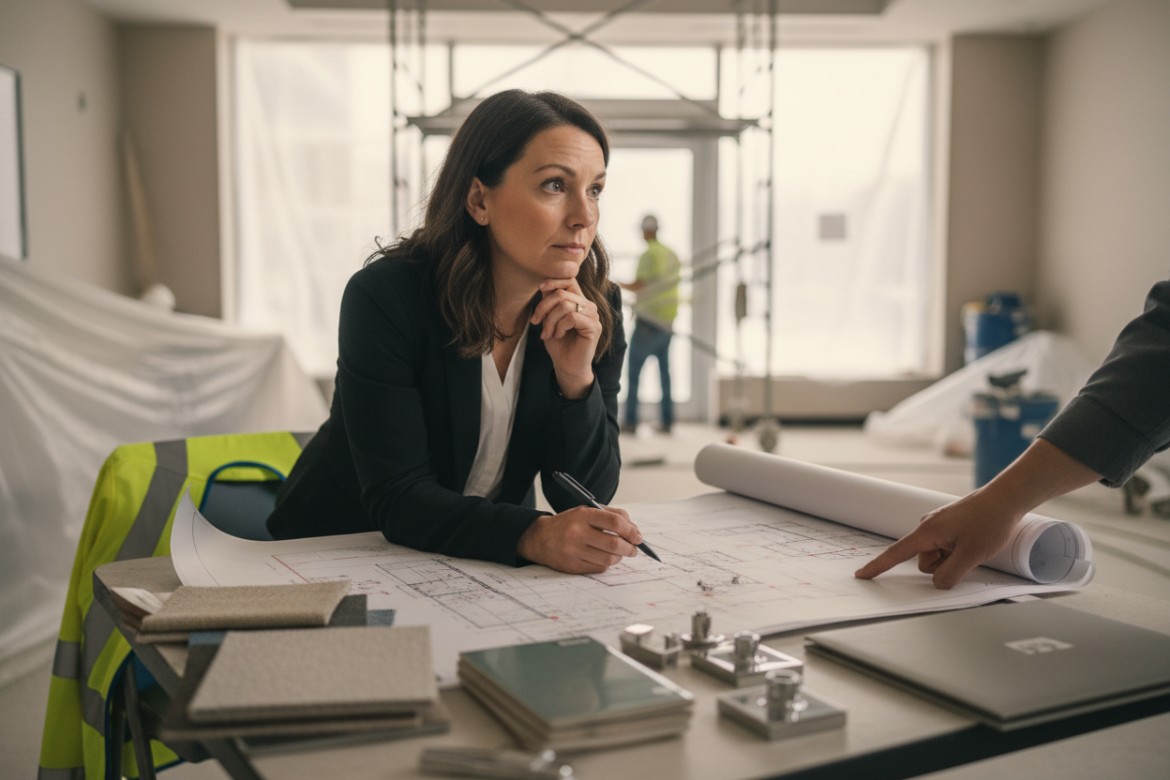
Here's the reality: when you're building a new medical office building or healthcare facility, you're juggling two things that can feel like they're working against each other — your budget and your standards.
Value engineering in healthcare gives you a way to balance both. It's not about stripping out scope or settling for less. It's about stepping back and asking: Is there a smarter way to get the same performance, durability, and look we want?
That question, asked early and often, is where the real savings happen. And when you've got the right team around the table, it becomes a conversation about options rather than sacrifices.
If you're planning a healthcare project and wondering where the budget flexibility actually lives, talk to Vertix Builders about value engineering strategies that protect what matters most.
So What Is Value Engineering in Healthcare, Really?
At its core, value engineering in healthcare is a structured way to look at your project and find places where you can:
-
Get construction costs in line with what you've budgeted
-
Keep meeting all the codes and clinical standards you're required to hit
-
Preserve the experience and performance you envisioned for the space
The key word there is structured. This isn't about randomly swapping materials or making panic cuts late in the game. It's a deliberate review, done collaboratively, focused on the parts of your project where flexibility actually exists.
Because here's the thing — in healthcare, a lot of decisions are locked in by code. Life-safety systems, infection prevention requirements, clinical infrastructure — those aren't negotiable. Value engineering focuses on everything around those non-negotiables.
Where Contractors Actually Focus (Hint: It's Not Your Floor Plan)
From a general contractor's perspective, most value engineering doesn't touch your layouts, room adjacencies, or clinical flow. Those decisions belong to your design team and are tied directly to how your providers work. That said, due to Vertix Builders healthcare focus and experience, we can review these layouts and programming and comment on potential efficiencies in layouts and space grouping. Ideally, this is done in concert with the design team to ensure the changes don’t create negative workflow or compliance issues.
What we do look closely at:
-
Lighting packages – Are there fixtures in the spec that could be swapped for alternatives with the same light output and look?
-
Plumbing fixtures – Faucets, flush valves, accessories — often there are comparable products from different manufacturers that perform identically.
-
Flooring and tile systems – You might not need the most expensive option to get the durability and cleanability you're after.
-
Exterior building elements – Sunshades, metal panels, curtain wall systems — these can have surprising cost variability depending on how they're designed and sourced.
The goal isn't to downgrade. It's to find options that do the same job, look the same (or close to it), and meet the same standards — at a better price point.
What This Looks Like in Practice
Let's get specific, because value engineering in healthcare is easiest to understand when you see it in the line items.
-
Light fixtures: A lot of lighting packages include premium fixtures that can be substituted with alternatives delivering the same light levels, color temperature, and visual quality. A strategic re-select can trim costs without anyone noticing a difference in the space.
-
Plumbing fixtures: Different manufacturers make faucets and flush valves with nearly identical performance specs, warranties, and maintenance profiles. When the function matches, switching brands can free up real dollars.
-
Flooring and tile: You don't always need the most expensive tile to hit your durability and aesthetic targets. Carefully selected alternatives can achieve the same look and cleanability while bringing the budget back in line.
None of these changes affect how providers work or how patients move through your building. They just get you to the same outcome more efficiently.
A Real Example: The Boulder Centre for Orthopedics & Spine Project
On a recent project we completed — the 37,000-square-foot Boulder Centre for Orthopedics & Spine facility in Broomfield — our team used value engineering to unlock substantial savings without changing the character of the building or the quality of the space.
This two-story medical office building houses an ambulatory surgery center on the first floor alongside a convalescent care center, with the orthopedic clinic and physical therapy programs on the second floor. Working alongside Infusion Architects and the ownership team, we found two areas where smart substitutions made a major difference:
-
Re-thinking the sunshades: By changing how the window sunshades were designed and fabricated, we maintained the same performance and appearance while saving over $150,000.
-
Refining the exterior metal panels: We re-evaluated the original metal panel system and identified a different product that looked nearly identical and met all performance requirements. That single change saved an additional $400,000.
The building still looks and functions exactly the way the owner envisioned. The difference? A smarter path to get there.
How the Process Actually Works
Good value engineering in healthcare is never one person making unilateral calls. It's a review process that brings everyone to the table:
Step 1: The contractor develops options. We put together alternative packages — different lighting selections, plumbing fixtures, exterior materials, finishes — with clear information on cost impact and any performance or appearance trade-offs.
Step 2: The architect and owner review. These options go to the design team and ownership for evaluation. Some get accepted. Some get rejected based on brand standards, design intent, or operational preferences. That's how it should work.
Step 3: The owner makes informed decisions. You see the numbers side by side with the implications. Nothing is a blind cut. You choose what aligns with your priorities.
What usually happens? Owners find they're comfortable accepting many of these adjustments because they still get the performance and aesthetics they wanted — while freeing up budget for other priorities or simply protecting their bottom line.
When Should You Start This Conversation?
The best time to dig into value engineering in healthcare is early — once your preliminary design and major systems are defined, but before everything is locked in and fully priced.
Starting early means:
-
You avoid last-minute scope cuts that feel more like concessions.
-
Your design team has time to properly vet alternatives.
-
You keep your schedule on track while capturing savings.
-
Everyone stays focused on shared goals instead of scrambling to close gaps.
The earlier your contractor joins the planning process, the more options you'll have. Wait too long, and the only moves left are the ones nobody wants to make.
Frequently Asked Questions About Value Engineering in Healthcare
Here are quick answers to common questions you may have as you consider value engineering for your healthcare project.
What can be value engineered in a healthcare facility?
Most value engineering focuses on materials and products — lighting, plumbing fixtures, finishes, and exterior systems — while preserving clinical layout, life-safety systems, and key infrastructure.
Does value engineering reduce quality of care?
It shouldn’t. When done correctly, value engineering protects patient care and staff efficiency by targeting non‑clinical elements and only approving changes that maintain required performance and compliance standards.
Who is involved in value engineering decisions?
Your contractor typically proposes options, and your architect and ownership team review and approve or reject them based on design intent, standards, and operational needs.
When should we start value engineering discussions?
Ideally, you start during early design development, once major goals are defined but before final pricing, so there is enough time to evaluate options without impacting schedule.
Bringing Value Engineering Into Your Next Healthcare Project
Value engineering in healthcare isn't about cutting corners or settling. It's about making informed, collaborative decisions that help you deliver the facility your patients and staff deserve — within a budget that actually works.
When your contractor, design team, and stakeholders are all at the table, value engineering becomes a tool for better choices, not unwanted compromises.
Exploring a medical office building, clinic, or healthcare facility? Connect with Vertix Builders to talk through practical value engineering opportunities on your project.